Probiotic Supplements for Better Gut Health and Digestion
Your gut does a lot more than digest food. Roughly 70% of your immune system lives in your digestive tract, and your gut microbiome influences everything from nutrient absorption to mood regulation and energy levels. When the balance of good and bad bacteria shifts, you feel the effects throughout your entire body.
Probiotic supplements introduce beneficial bacterial strains that help restore and maintain a healthy gut microbiome, so your digestive system and immune defenses can function at their peak.
How Probiotic Supplements Support Your Health
Digestive Balance and Regularity
Bloating, gas, and irregular digestion are often signs that your gut bacteria are out of balance. Probiotics help repopulate your digestive tract with beneficial strains like Lactobacillus and Bifidobacterium, which support smoother digestion and more consistent regularity.
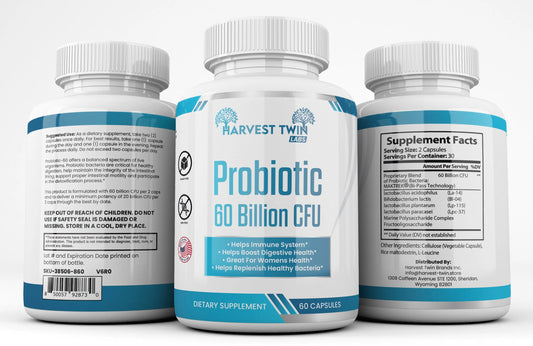
Probiotic 60 Billion CFU delivers a high-potency dose of beneficial bacteria per serving, providing robust support for digestive health and microbiome balance.
Immune System Support
A well-balanced gut microbiome directly supports immune function. Beneficial bacteria help train immune cells, strengthen the gut lining, and compete with harmful pathogens. Consistent probiotic use may help reduce the frequency and duration of common seasonal health challenges.
Pairing a probiotic with a targeted immunity supplement creates a comprehensive approach to year-round immune support.
Nutrient Absorption
Even the best diet is less effective if your body cannot properly absorb nutrients. A healthy gut lining, supported by beneficial bacteria, helps ensure that vitamins and minerals from food and supplements are absorbed efficiently.
Choosing the Right Probiotic Supplement
CFU Count Matters
CFU (colony-forming units) indicates how many live organisms are in each serving. For general maintenance, 10 to 30 billion CFU is often sufficient. For more targeted support, higher-potency options with 50 to 60 billion CFU may be more appropriate.
Strain Diversity
A quality probiotic includes multiple bacterial strains that target different areas of the digestive tract. Look for formulas that specify strain names, not just species, on the label.
Shelf Stability
Some probiotics require refrigeration, while others are shelf-stable. Shelf-stable formulas use encapsulation technology to protect bacteria from heat and moisture, making them more convenient for travel and daily use.
Building a Gut-Healthy Routine
Probiotics are most effective when combined with prebiotic-rich foods that feed beneficial bacteria. Garlic, onions, bananas, asparagus, and whole oats are excellent prebiotic sources.
Reducing processed food, artificial sweeteners, and excessive antibiotic use helps protect your existing gut bacteria. Managing stress is also critical, since elevated cortisol disrupts gut motility and bacterial balance. Supplements for mental health and mood balance can complement your gut health strategy through the gut-brain connection.
Staying hydrated and eating a fiber-rich diet further supports the environment probiotics need to thrive.
Frequently Asked Questions
What are probiotics?
Probiotics are live beneficial bacteria that support digestive health, immune function, and nutrient absorption when consumed in adequate amounts.
How many CFU do I need in a probiotic?
For general digestive health, 10 to 30 billion CFU per day is a common recommendation. Higher counts, like 50 to 60 billion CFU, may be needed for more intensive support.
How long does it take for probiotics to work?
Most people notice improvements in digestion within 1 to 2 weeks. Full microbiome rebalancing may take 4 to 8 weeks of consistent daily use.
Can I take probiotics with antibiotics?
Yes, but take them at least 2 hours apart. Probiotics may help reduce antibiotic-related digestive side effects and support microbiome recovery.
Should probiotics be taken with food?
Taking probiotics with food, especially a meal containing healthy fats, can improve bacterial survival through stomach acid.
*These statements have not been evaluated by the Food and Drug Administration. Products are not intended to diagnose, treat, cure, or prevent any disease.